Measuring HVAC System Efficiency: From Power Input to Cooling Output
Heating, Ventilation, and Air Conditioning (HVAC) systems are among the largest energy consumers in residential, commercial, and data center environments. Accurately quantifying HVAC efficiency is essential for equipment certification, regulatory compliance, and system optimization.
HVAC efficiency measurement relates electrical energy consumed by compressors, fans, and pumps to the thermal energy delivered as cooling or heating. Electrical input is measured directly in watts, while useful output is expressed as cooling or heating capacity derived from temperature differences, airflow, or fluid flow. Standardized efficiency metrics provide a consistent way to correlate these electrical and thermal domains under defined operating conditions.
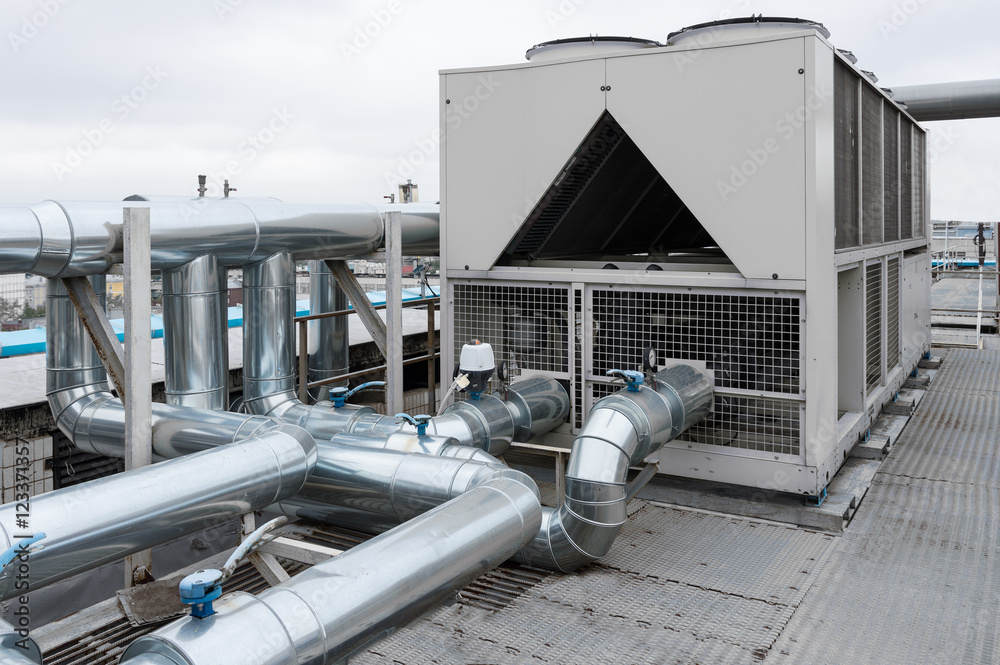
HVAC efficiency testing generally falls into two categories. Residential and light commercial air-conditioning systems reject heat directly to ambient air and are tested according to AHRI 210/240. The resulting test data is used to calculate efficiency ratings, most notably the Seasonal Energy Efficiency Ratio (SEER). Larger cooling systems are implemented as air-cooled or water-cooled chillers that distribute chilled fluid to multiple loads. These systems are tested according to AHRI 550/590, which defines efficiency metrics such as Integrated Part Load Value (IPLV) and Non-Standard Part Load Value (NPLV) across multiple operating points.
Advances in HVAC design continue to improve efficiency, but standardized testing is required to ensure performance claims are measurable, comparable, and repeatable.
HVAC Test Standards and Efficiency Metrics
AHRI 210/240 and SEER
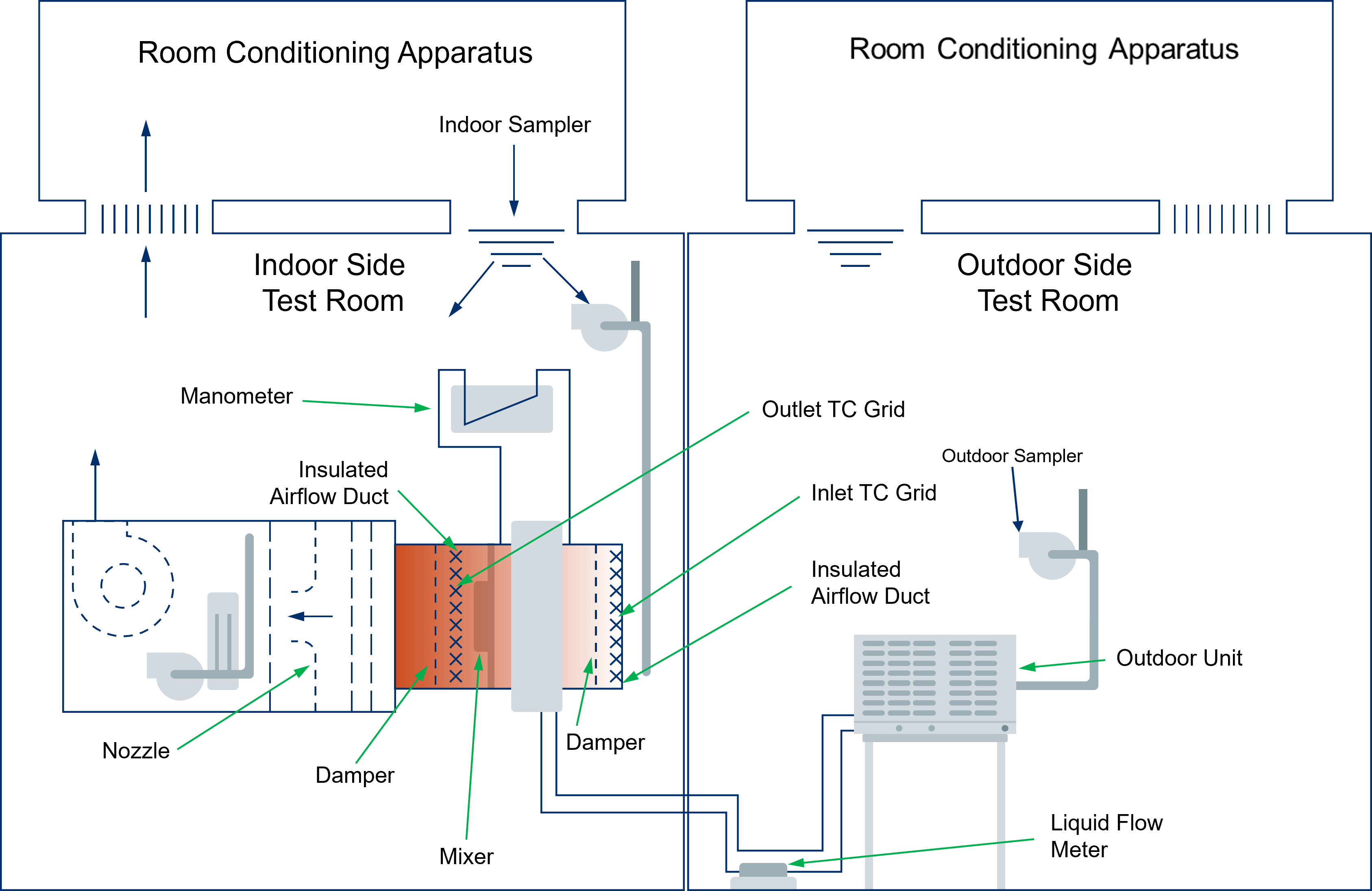
AHRI 210/240 defines the laboratory test procedures for evaluating residential and light commercial unitary air-conditioning equipment. It specifies operating conditions, airflow requirements, instrumentation accuracy, and test sequences intended to represent typical seasonal operation.
Electrical input power and delivered cooling output measured during these tests are combined according to the standard’s methodology to calculate efficiency metrics. The most commonly referenced result of AHRI 210/240 testing is SEER, which is widely used for equipment comparison, regulatory compliance, and energy efficiency labeling. Below is an example of a room setup with noted points of equipment, temperature exchange, and measurement:
SEER is defined as:
SEER = Qtotal / EtotalQtotal is total cooling output (BTU) and Etotal is total electrical energy input (Wh).AHRI 550/590 for Chillers
AHRI 550/590 defines performance testing requirements for air-cooled and water-cooled chillers used in commercial and industrial applications. Rather than a seasonal average, this standard evaluates efficiency at discrete load conditions that reflect real-world operation.
Test results obtained at 100 percent, 75 percent, 50 percent, and 25 percent load are combined using defined weighting factors to calculate metrics such as IPLV and NPLV, providing a representative measure of chiller efficiency across typical operating profiles.
Measuring Thermal Output and Electrical Input
Air-Side Measurements for AHRI 210/240
For unitary air-conditioning systems, cooling output is calculated from airflow and air enthalpy differences between return and supply air:
Q = 4.5 × CFM × (hreturn − hsupply)This requires measurement of airflow rate, dry-bulb temperature, and relative humidity at both the return and supply. Electrical energy input is measured using a true RMS power analyzer and integrated over the defined test intervals.
Water-Side Measurements for AHRI 550/590
For chillers, cooling capacity is calculated from fluid flow and temperature differential:
Capacity (tons) = (ṁwater × cp × ΔT) / 12,000Electrical input power is measured in real time using a precision power analyzer. Efficiency at each operating point is calculated as kW per ton, defined as input power divided by cooling capacity. These values are then combined to calculate IPLV or NPLV.
Supporting ASHRAE Test Procedures
ASHRAE standards define detailed test procedures that support AHRI efficiency ratings. ASHRAE Standard 37 specifies test methods for unitary HVAC equipment, while ASHRAE Standard 30 defines test procedures for liquid chillers.
These standards establish requirements for sensor placement, stabilization time, environmental conditions, and data handling necessary to produce valid and repeatable results.
Implementing a Compliant Test Setup
A compliant HVAC efficiency test setup requires synchronized measurement of electrical input power and thermal output using calibrated instruments and a common time base.
The test setup includes:
-
A WT series precision power analyzer connected to the HVAC or chiller power inputs to measure real, reactive, and apparent AC power, along with electrical energy consumption
-
A SmartDac+ GM10 data acquisition system acquiring supply and return water temperatures for cooling output calculations, flow meter analog output for determining mass or volumetric flow rate, and ambient air temperature and humidity for monitoring environmental conditions
-
Controlled environmental conditions to ensure repeatable, standards-aligned operation
-
Time-synchronized data logging across the WT series power analyzer and GM10 measurement channels
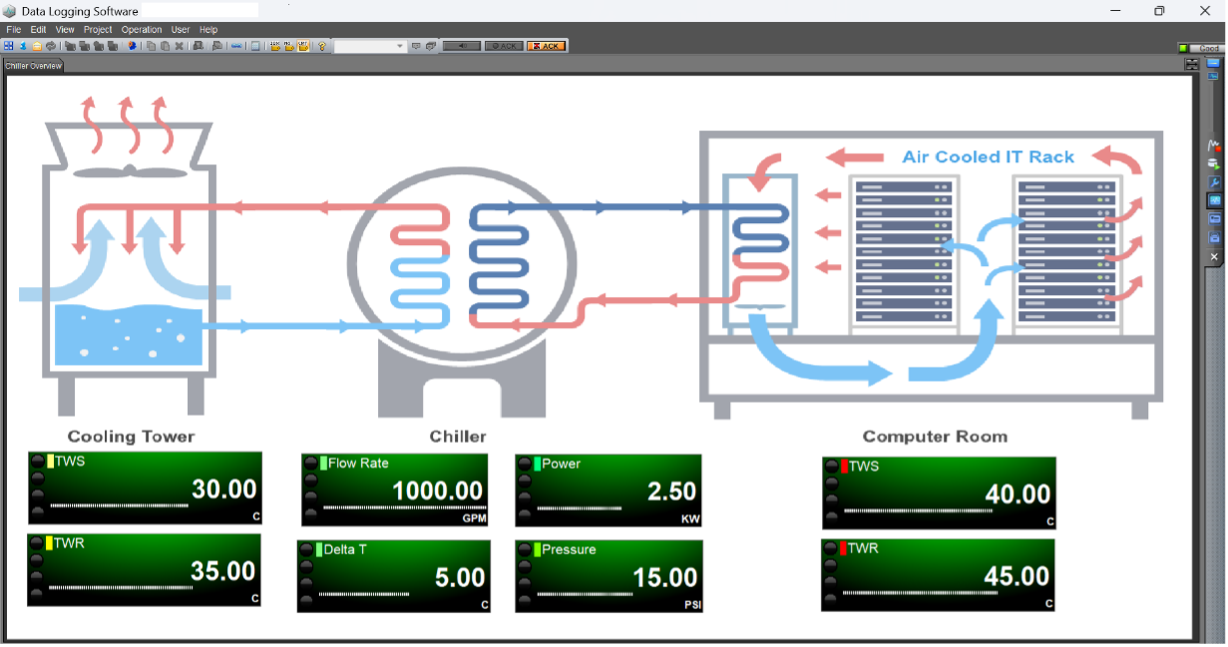
GA10 Data Logging Software is used to time-align electrical and thermal data and perform the required calculations, including delivered cooling capacity derived from temperature differential and flow rate, total electrical energy input, and resulting efficiency metrics such as COP, kW/ton, or seasonal efficiency values depending on the applicable standard.
Conclusion
Accurate HVAC efficiency evaluation depends on precise correlation of electrical input power with delivered thermal output under standardized test conditions. AHRI 210/240 and AHRI 550/590 provide the testing frameworks used to generate comparable efficiency metrics, with SEER being the most widely recognized outcome of AHRI 210/240 testing.
Yokogawa’s power analyzers and data acquisition systems provide the accuracy, synchronization, and traceability required to implement compliant HVAC efficiency test benches. By combining high-precision electrical measurements with reliable thermal data acquisition, engineers and test laboratories can produce repeatable, standards-aligned efficiency results for residential air-conditioning systems, commercial chillers, and data center cooling infrastructure.
Related Industries
Related Products & Solutions

Low Speed DAQ & Industrial Recorders
- Solid state relays outperform switching DMMs
- Universal inputs (TC/RTD/V)
- DC to 1kS/s, scalable to thousands of channels
- Ideal for design validation, environmental, and facility monitoring

Power Analyzers and Power Meters
Industry-leading accuracy for efficiency, harmonics, and power parameters, ensuring regulatory compliance and confident design of energy-efficient systems.